


Personal Belongings of Late Qari Abdul Basit on Display at Egypt’s Reciters Museum
IQNA – A collection of personal belongings of legendary qari Abdul Basit Abdul Samad is among the items on display at the newly launched Museum of Quran Reciters in Egypt.
Ahmed Fouad Heno, the Egyptian minister of culture, officially inaugurated the museum on Monday. Also present at the opening ceremony was Awqaf Minister Osama Al-Azhari.
The museum celebrates Egypt’s rich spiritual and cultural heritage and honors iconic voices of Quran recitation.
It contains personal works and belongings of 11 of Egypt’s senior qari, including Muhammad Rifa’at, Abdul Fattah Shasha’ei, Taha Al-Fashni, Mustafa Ismail, Mahmoud Khalil Al-Husari, Muhammad Siddiq Minshawi, Abu al-Ainain Shuaisha, Mahmoud Ali Al-Banna, Abdul Basit Abdul Samad, Muhammad Mahmoud Tablawi, and Ahmed Al-Ruzifi.
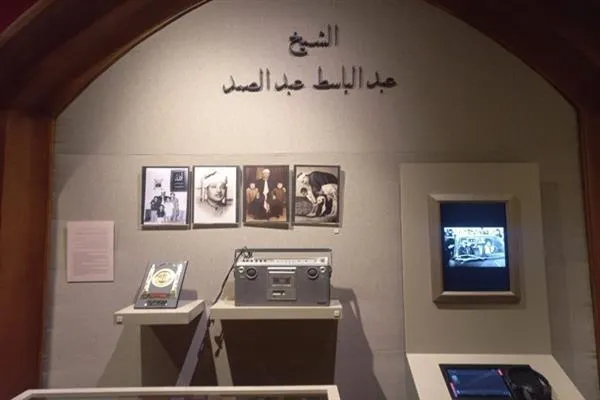
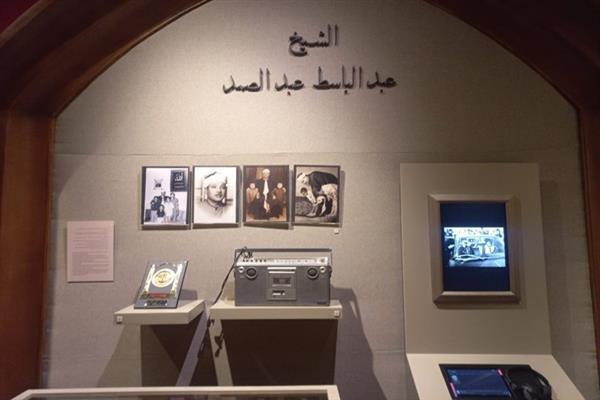
On section has displayed a collection of personal belongings of Abdul Basit alongside a board introducing the biography and Quranic services of this prominent qari of Egypt and the Muslim world.
A framed photo of Abdul Basit with his children, a gramophone, a turban, several prayer beads, a hat, plaques of appreciation, and a box containing a copy of the Quran are among the data-x-items that have been put on public display in this part of the museum.
Alaa Husni, grandson of Mustafa Ismail, told Misri Al-Youm that the family of the late qari have donated a number of his grandfather’s personal belongings to the museum, including a rosary, a staff, a watch, a turban, clothes, a radio and a panel with newspaper clippings showing his honoring by Gamal Abdel Nasser (the then president of Egypt) and his presence alongside Muhammad Anwar Sadat (one of the former presidents of Egypt) on a trip to al-Quds.
Read More:
Biransa, the daughter of Sheikh Muhammad Mahmoud Tablawi, said the ministry of Awqaf had spoken to the family of this late Egyptian reciter a year ago to collect his belongings, and the family was eager to donate his Quran, clothes, and personal photos to the museum.
“(Launching) this museum is a very beautiful gesture and has brought together the remains of a number of famous Quran reciters who will never be repeated,” she added.
4323526
